Piano marathon for nimble fingers with world premiere at Willem Twee Toonzaal
Incredibly difficult piano music that will make you dizzy. A perfect fit for keyboard champion Abel Sánchez-Aguilera. He’ll perform in ‘s-Hertogenbosch on Sunday.
Mark van de Voort
Brabants Dagblad; January 8, 2026, 2:30 PM
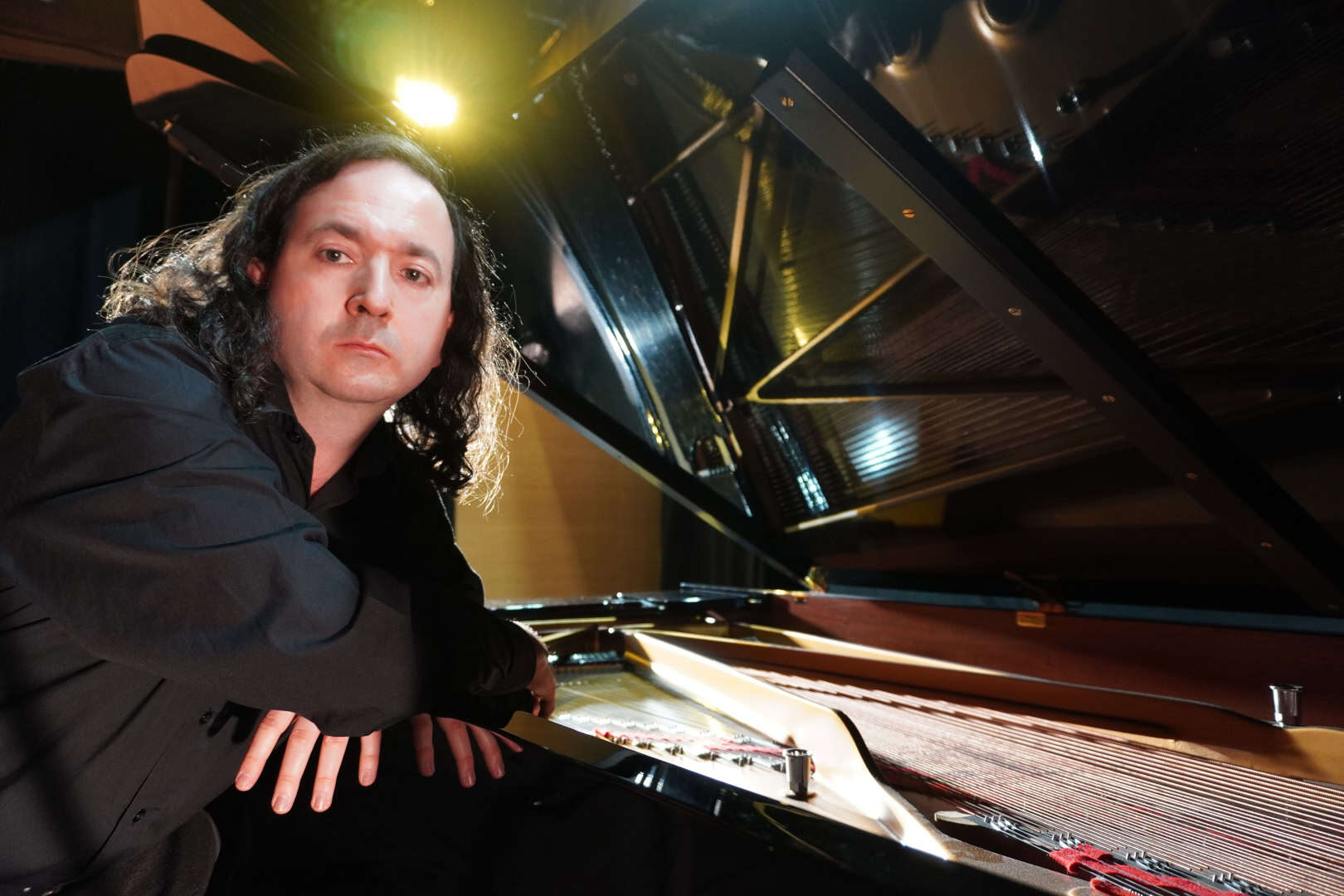
Like trained top athletes, pianists tackle the most challenging repertoire. Dexterous keyboard champions break a sweat tackling Bach, Beethoven, and Mozart. But there’s always room for improvement. There are piano compositions that demand an almost Olympic feat. Often lesser-known, yet brilliant composers from the recent past who challenge courageous pianists with hyper-complex music. Piano works that can often last for hours.
Spanish pianist Abel Sánchez-Aguilera is no stranger to it. The congenial, thoroughbred musician specializes in meticulous counterpoint, infernal rhythm, and thunderous polyphonic fugues. On Sunday, January 11th, this keyboard maestro will be our guest at the Willem Twee Toonzaal in Den Bosch for a piano marathon.
During two concerts (starting at 11:00 AM and 2:30 PM), he will embark on a journey through the intense piano oeuvres of piano gods such as Ferruccio Busoni (1866-1924), Kaikhosru Shapurji Sorabji (1892-1988), and the now 75-year-old Scottish composer Alistair Hinton. A world premiere by the latter will be performed this afternoon.
“These composers deviate from the familiar mainstream—say, Stravinsky, Schönberg, Bartók. Composers like Busoni and Sorabji create their own, alternative musical history. They ignore existing avant-garde trends and create their own musical language,” says Sánchez-Aguilera from his home in Spain.
“In their piano compositions, you see the past and the present reflected. The piano tradition of composers like Bach and Chopin is combined with an ultramodern, expressive sound language. Sometimes you hear recognizable tonal elements, but often the work is surprisingly atonal.”
Intoxicating
Eight years ago, Abel Sánchez-Aguilera transitioned to a career as a pianist. Before that, he was primarily active as a biomedical researcher, specializing in leukemia. “I had reached a point where I had to make a hard choice. Ultimately, I chose my lifelong passion: a career as a musician.” Sánchez-Aguilera has previously appeared twice at the Willem Twee Toonzaal in Den Bosch. In 2020 and 2022, he performed Toccata Seconda and Toccata Terza by the British-Indian composer Kaikhosru Sorabji. These exceptionally challenging piano works take several hours to perform.
Sorabji is an outlier in Western music history. In his intoxicating keyboard landscapes, Sorabji ingeniously weaves together all sorts of themes and motifs, often through drawn-out fugues, chorales, nocturnes, or preludes. “My passion for complex piano music was truly ignited when I saw Sorabji’s scores. I had never encountered music of such dimension. It is exceptionally pianistic music, but also exceptionally complex. A great challenge.”
During this piano marathon in Den Bosch, Sánchez-Aguilera will perform one of Sorabji’s most beloved works: Gulistān. He will also play a movement from his four-and-a-half-hour Piano Symphony No. 1 (Tāntrik). During his double recital, Sánchez-Aguilera will delve into music history.
“Memories are central. All the piano works on the program refer to earlier musical heroes or literary sources of inspiration. For example, Sorabji is fond of ancient Persian poetry. Busoni alludes to Bach, while the contemporary composer Alistair Hinton expresses his love for Rachmaninov and Liszt.” Hinton knew Sorabji well and now heads the Sorabji Archive. Hinton encouraged the eccentric, elderly Sorabji at the time to finally release and perform his piano compositions.
Listening advice
Sánchez-Aguilera possesses exceptional stamina. On some piano works—such as the world premiere of Hinton’s Piano Sonata No. 5—Sánchez-Aguilera even labors for a whole year. “My rehearsal practice is long-term. The first few times, I perform the music very slowly. That’s how I build muscle memory. Little by little, I get the work under control. Everything is then very clear in my mind. Then I gradually increase the tempo, so that the piano work flows almost automatically from my fingers. This piano music is so technically complex that you can’t process it in real time,” says Sánchez-Aguilera.
He has some good advice for new listeners. “Just let yourself be carried away by the brilliant, sonorous piano sound of this music. And if you’re up for the intellectual challenge, you can also try to unravel the various themes as you go.”
 ABEL SÁNCHEZ-AGUILERA